The Real Math Behind Going Independent in San Antonio
You can love your craft and still feel stuck on payday. Most beauty professionals don’t hit a ceiling because they’ve run out of skill or hustle. They hit it because the commission structure they work under quietly decides what their effort is worth. The honest conversation around commission vs a salon suite isn’t really about chairs and rent; it’s about who controls your salon employee income, and what your suite renter income could actually look like once that ceiling is gone.

The Real Math Behind Commission vs a Salon Suite
Most splits in a traditional salon land somewhere between 40/60 and 60/40, often with retail returning only a small percentage to the stylist. On a slow week, the math feels acceptable. On a busy week, it stings. Every additional client you book makes the house richer at roughly the same rate it makes you richer, and that’s the quiet trade-off most stylists accept for years before they question it.
Run a typical week: a stylist averaging 25 services a week at a $90 ticket grosses $2,250, and a 50/50 split means take-home before tax is roughly $1,125. In a private suite at around $325 weekly, with another $150 spent on supplies, that same stylist nets closer to $1,775. Across a year, that gap puts thousands of dollars back in the working pro’s pocket. The numbers only get more compelling as your average ticket grows.
What Actually Caps Your Salon Employee Income
The frustrating part about salon employee income isn’t only the percentage taken off the top. It’s the structural limits you can’t negotiate around. Your schedule belongs to the owner, so you can’t add an early Saturday or take a Tuesday off without asking permission. Pricing belongs to ownership too, so even if you’ve trained for three years in a specialty technique, you charge what the printed menu says you charge.
Retail commission is often a token percentage that doesn’t reflect the trust a client placed in your recommendation. Salon employee income also tends to plateau much earlier than most people expect. Once your book is full, the only paths forward are working longer hours, squeezing more clients into less time, or hoping ownership raises menu prices. None of those options protect your craft, your body, or your long game.
How a Suite Renter Income Actually Grows
A higher suite renter income doesn’t come from charging dramatically more on day one; it comes from controlling small levers that a commission structure hides from you. Retail is the clearest example. As an independent operator, every shampoo, mask, or styling product you sell adds real margin to your bottom line instead of a five or ten percent tip. Two product sales per client at a fifty percent margin can quietly add hundreds to a weekly suite renter income without booking a single extra appointment.
The second lever is service customization. In your own space, you can build add-ons that play to your strengths and price them around your time and expertise, whether that’s a deep conditioning ritual, a scalp treatment, or a specialty styling finish. The third lever is consistency, since clients who walk into a calm, private room tend to stay longer, tip more honestly, and rebook before they leave. Most professionals see a real change in their numbers within ninety days of opening their own room, which is part of why San Antonio salon suites continue to attract the city’s most ambitious stylists.
Commission vs a Salon Suite: Knowing When You’re Ready
Honest answer: making this move is less about courage and more about timing. You’re close to ready when one strong week of services would more than cover your weekly rent, and when your client base is loyal enough to follow you to a new address. The math should also show a clear lift in your projected suite renter income before you sign anything. The transition tends to go smoothest when your numbers are honest, your book is current, and you’ve already thought through how you’ll communicate the move to your regulars.

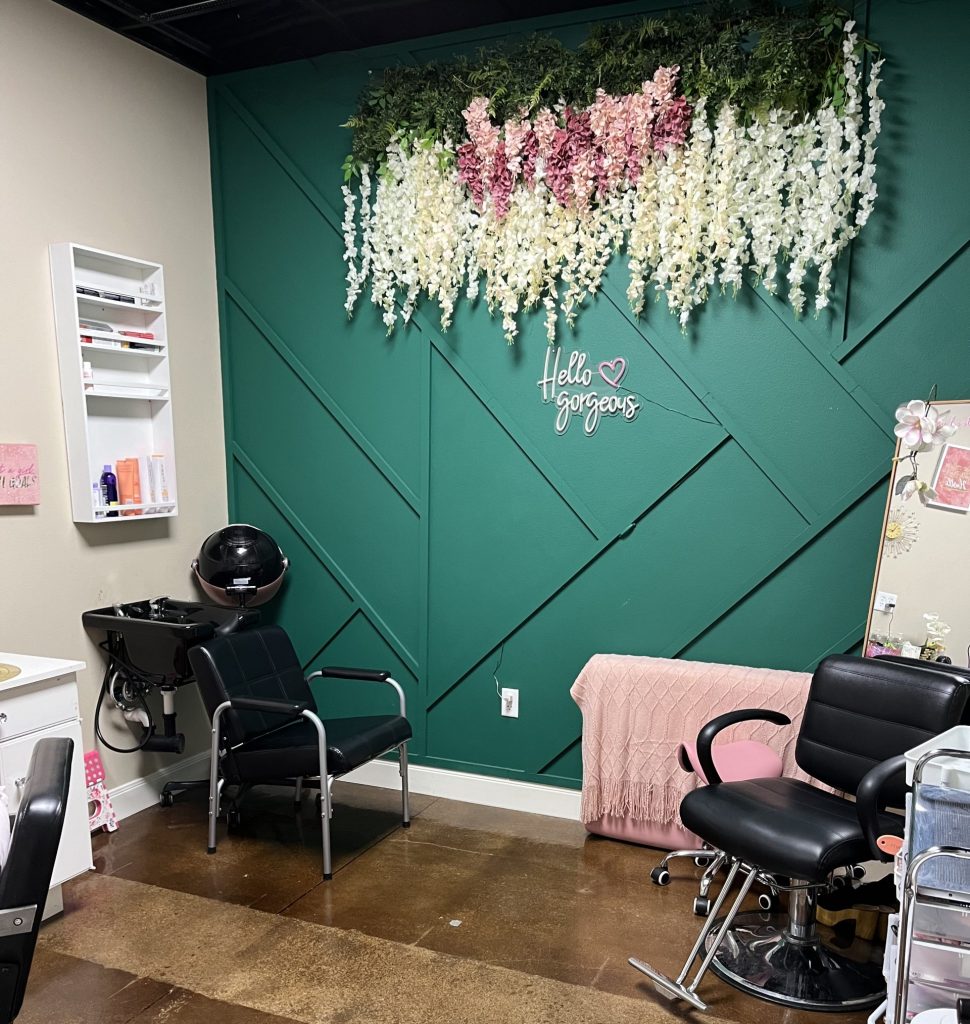
Before you commit, compare what’s included. At Mallorca Salon Studios, salon suites in San Antonio come with utilities, Wi-Fi, marketing support, and a directory profile that pulls in over a thousand monthly views from local clients searching for services, all rolled into one weekly rate. If you’ve ever scrolled through salon studios for rent in San Antonio and felt buried by what’s included versus what’s extra, that all-in-one model is the difference between projecting your real numbers and getting surprised at the end of every month.
Why North Star Is a Smart Place to Land
If you’ve outgrown the commission model and you’re scouting San Antonio salon space for rent, the North Star area is one of the strongest places to start. Mallorca’s North Star location sits at 742 Northwest Loop 410 inside Park North Shopping Center and offers fully customizable, 100% private rooms with extended hours from 7 a.m. to 11 p.m., seven days a week. Renters also tap into free webinars on finances and social media, plus a community of beauty entrepreneurs operating across more than 150 services. Among salon suites in San Antonio, this address is consistently ranked at the top of the field.
The deciding factor between commission vs a salon suite is rarely a single number. It’s the freedom to set your own pricing, keep your retail margin, and shape an experience that earns rebookings on its own. To tour a private room at one of the highest rated North Star salon suites in the city, call Mallorca Salon Studios at (210) 686-3210; the team can also walk you through other salon suites near North Star Mall. For a daily look at life on the other side of the commission split, follow @mallorcasalonstudios on Instagram.